// Featured work
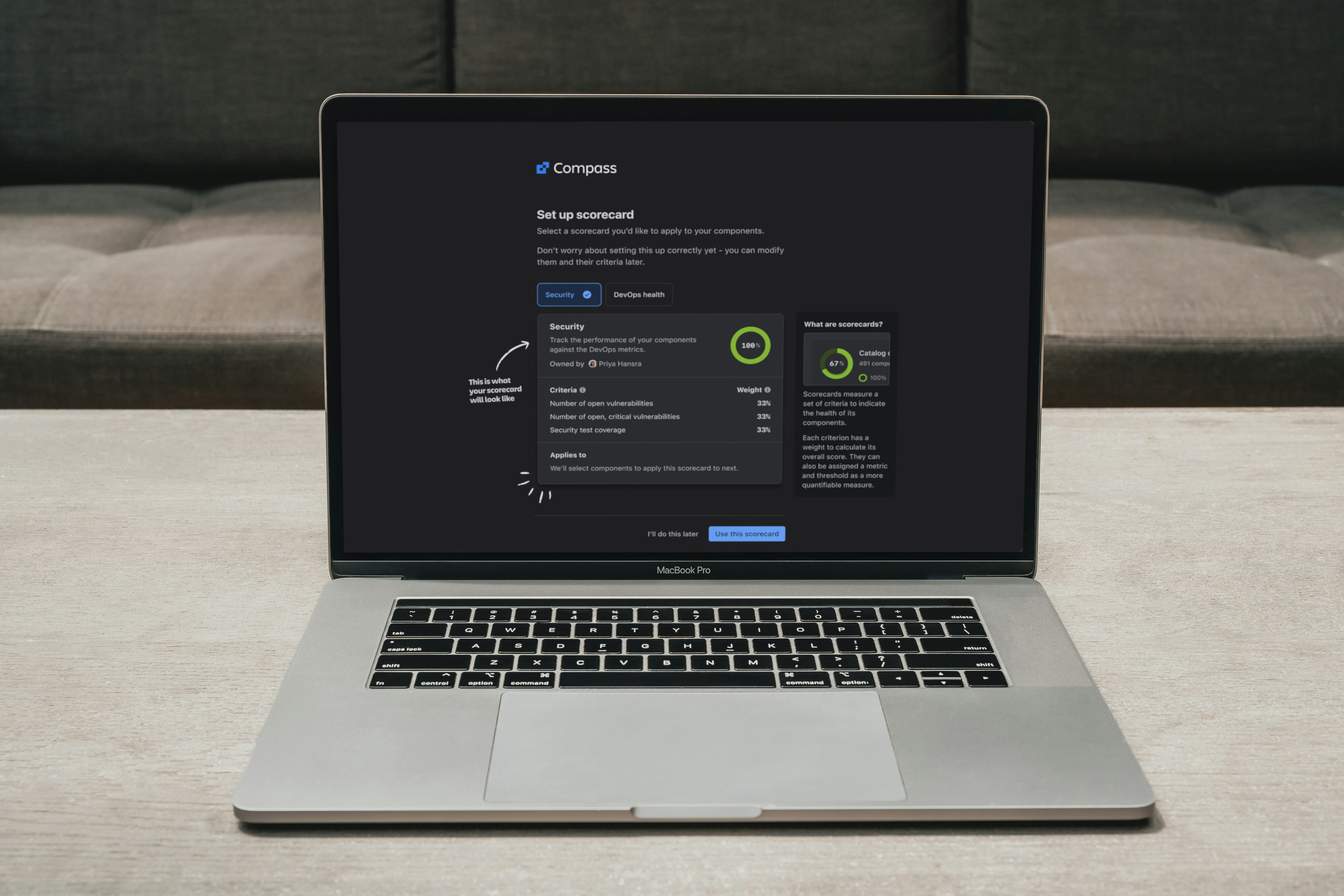
Reimagining onboarding for a new developer platform
Evaluating and improving the first impressions of Compass, a software service catalog and internal developer platform. I led a small design team that clarified company strategy.
The situation
Atlassian introduced a new developer platform product to market. Compass was struggling to find product market fit.
Usability barriers were complicating the market's signals about the product's desirability. It was unclear if customers didn't find value in the product, or were simply unable to properly set it up.
Compass leadership wanted to test a pivot in strategy. They wanted to move away from a simple software component directory towards a platform engineering tool to standardize, implement, and monitor technical best practices.
Design leadership piloted a "fresh eyes" method to inject bold thinking into Compass. I was invited in as an external consultant to pair with a Compass lead designer and rethink how to push their leadership's strategic goals.
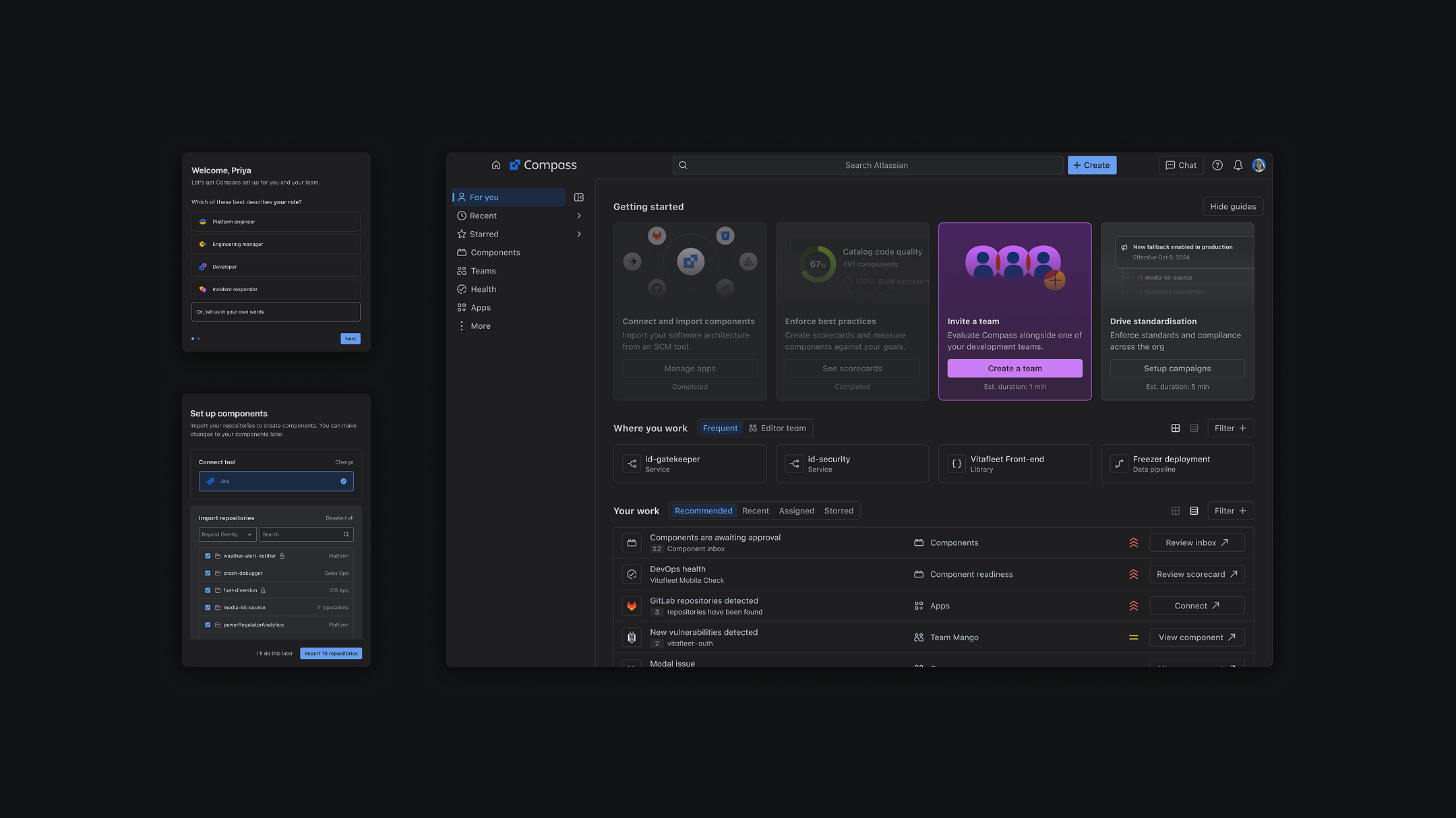
The goal. Revamp the onboarding experience to reduce drop off and increase instances with a "minimum viable catalog." Remove usability barriers to gain a clearer signal about product market fit and product strategy.
My role. My role was to lead a 2-week design spike, facilitate collaborative sessions, direct execution designers, and contribute to concept development. I was responsible for driving outcomes, including lasting guidance and principles.
The approach
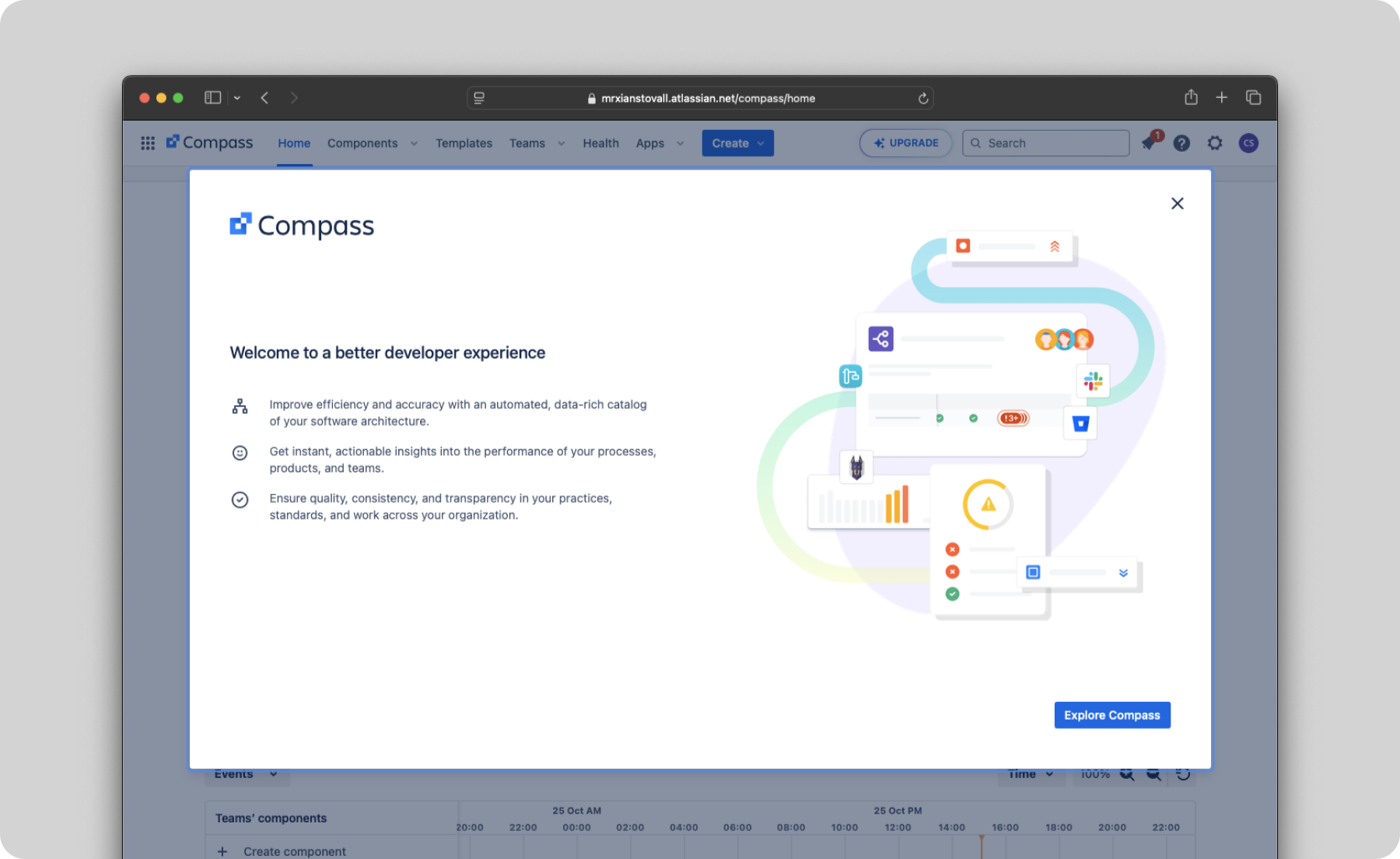
We ran this investigation over 2 weeks, working collaboratively with a lead designer from Compass and a lead researcher.
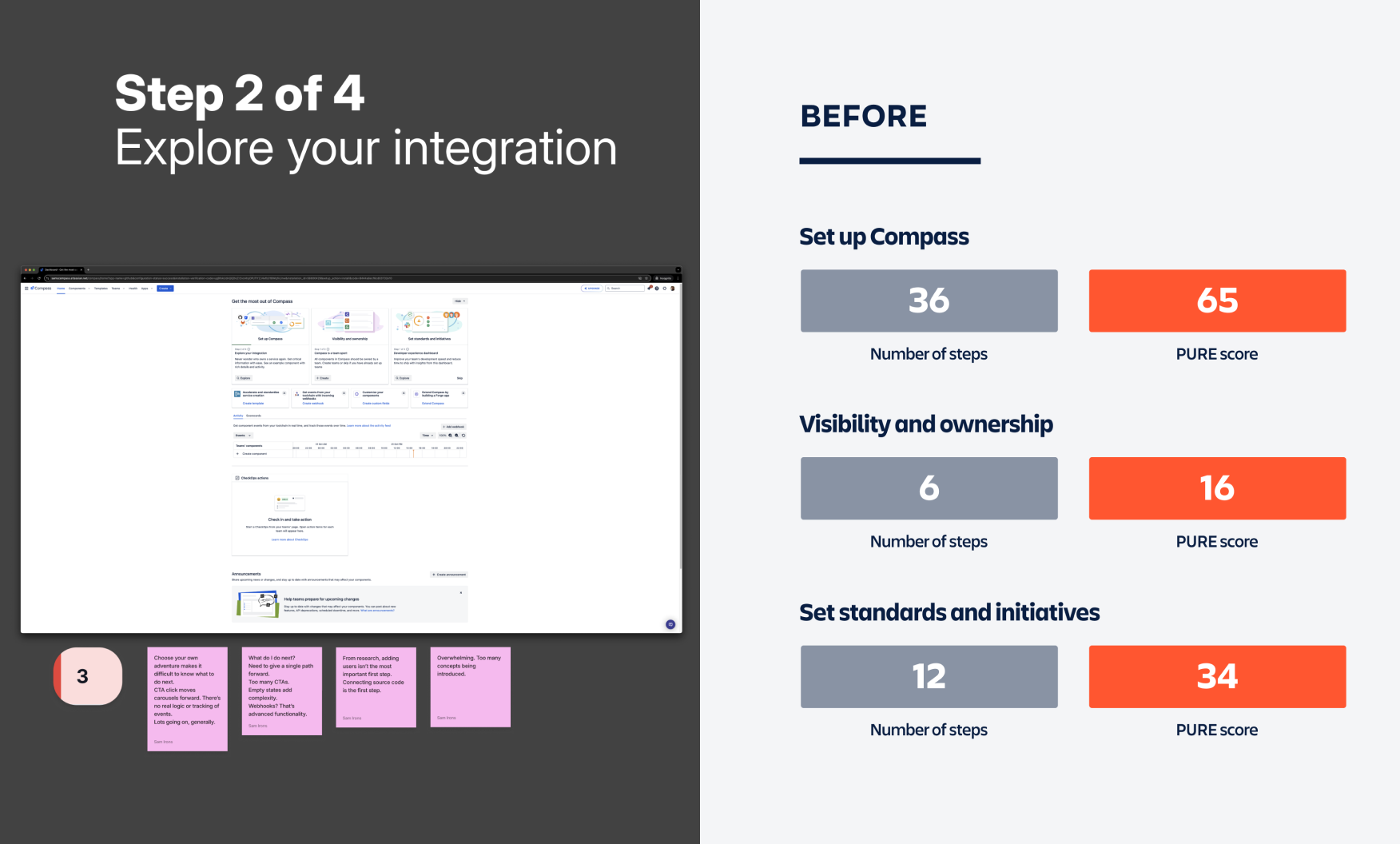
We first mapped the current flows, poured over activation research, and conducted heuristics evaluations using the PURE method.
Design principles guided us. Things like "make it personal" by customizing the onboarding journey to a persona. Or, "keep it real" by preferring real or sample data to empty states.
We then envisioned and prototyped several approaches using a "good/better/best" framework.
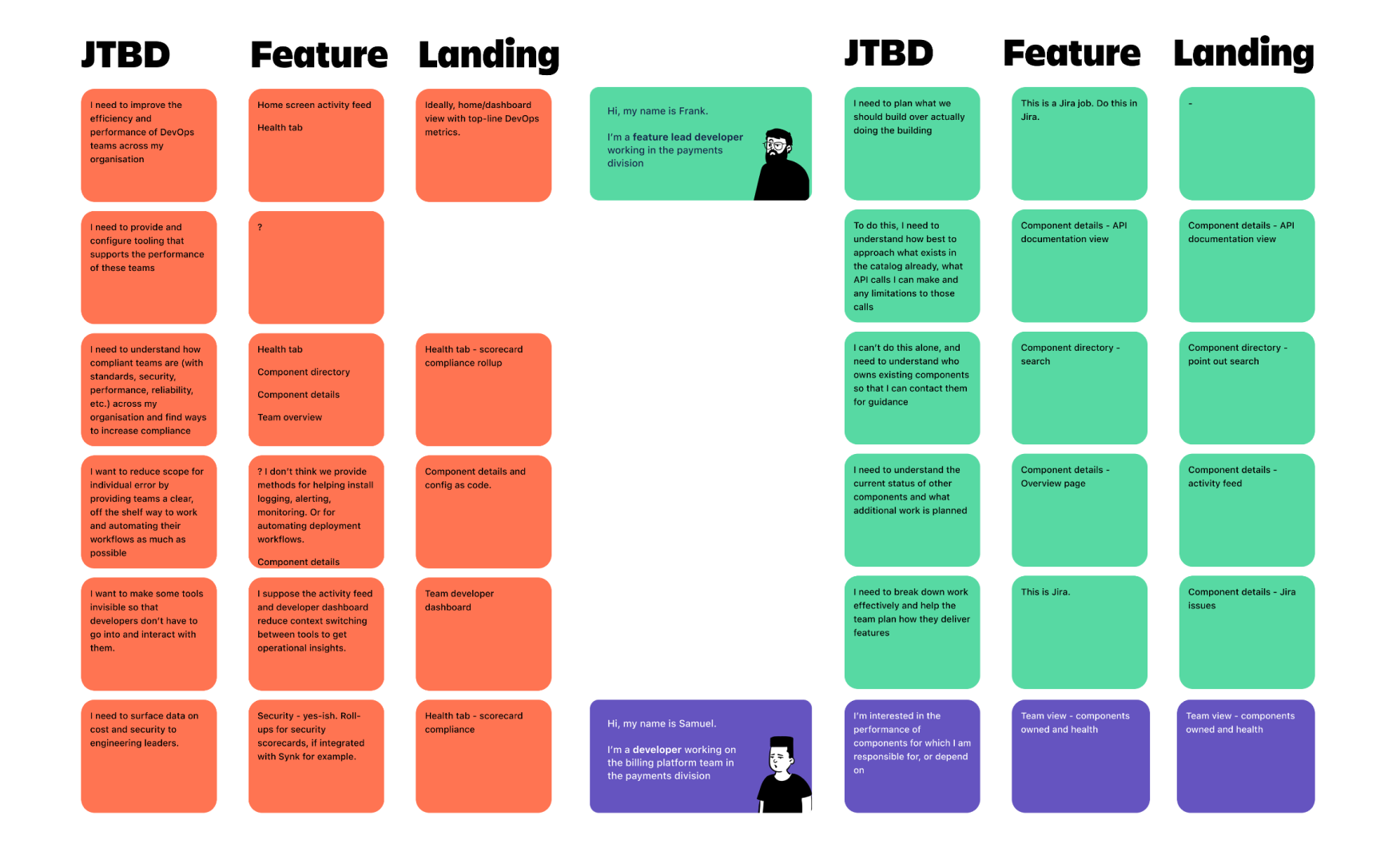
An ideal onboarding journey helped us prioritize which actions were most important to each persona.
Rather than choose your own adventure, we looked to map user personas to the features and capabilities that were most valuable to them.
This mapping later became an onboarding framework used for future developer-related experience onboarding across Atlassian.
PURE evaluations made a good substitute for customer interviews in our compressed timeframe. The "big numbers" from our evaluation showed leadership the extent of their usability problems, and provided a baseline for suggested improvements.
JTBD and personalization gave the product clearer market meaning. This thinking forced the team to clearly define their target personas and why they would hire an app like Compass. We mapped these JTBD to features and their most relevant landing pages.
The outcome
We reduced onboarding steps from 48 to 14, and our PURE score from 99 (unusable) to 19 (usable).
We reduced onboarding steps from 48 steps to 14, removing 34 steps from the journey.
After shipping, this experience:
- Increased onboarding completion rate from nearly 12% to 58%
- Increased scorecard creation from 4% to 30% per tenant
- Increased feature overall adoption from 46% to 62%
- Increased "minimum viable catalog" product action rates for creating basic objects and installing essential integrations
- Clarified strategy by removing usability barriers
The learnings
The hardest part of this project was carrying out parallel design work alongside roadmapped improvements from the team.
For example, we needed to suggest improvements to how Compass imports data from 3rd party integrations while the team was busy building out new integration points.
Clarifying the spike's scope and purpose, building close relationships with product leadership, and being deliberate in how this work was messaged were critical to its success.
I learned to bring teams into early concept development to gain inherent buy-in early. This reduced change aversion and got teams excited to build to a shared vision.
While Compass failed to achieve product market fit, this work removed usability barriers and design quality issues from strategic conversations.
The new flow delivered the user behavior the team wanted and it pushed people to try the features product leaders and our research team believed were most valuable to their emerging target market.
I learned that fresh eyes pushes teams to answer foundational questions they may have been avoiding. And, it challenges product leadership to evaluate the reality of their strategies, when design can be an easy scapegoat.