// Personal project
Design Oracle
A free and open-source oracle deck with rituals and readings to help UI/UX practitioners build their personal practice.
A provocation
Atlassian's executive leadership challenged the company to dramatically change how it worked, in order to get "back to green" on growth and revenue. Every team took up some version of that challenge. I wasn't impressed by what design leadership put forward: proposals that amounted to minor tweaks on our existing rituals and ceremonies.
I wanted to think more provocatively than that. So I started questioning the foundational assumptions underneath a design practice instead, things like the corporate calendar and the corporate work week, pulling from a personal philosophy I don't often bring into my professional life, one most design leaders wouldn't go near. I wondered what a design practice built on completely different first principles might look like.
That led me somewhere unexpected: a corporate design practice serves the designer less than a personal one does. As a provocation, I started imagining rituals built around a lunar calendar instead: a clock that floats above the work week and fiscal quarters, indifferent to both, the same one civilizations have looked to for centuries to guide practices like agriculture. I wrote the idea up publicly, on Medium. That Medium piece was the seed the Design Oracle grew from.
A corporate design practice serves the designer less than a personal practice.
Teaching myself AI
I pitched the idea inside Atlassian first. It wasn't taken very seriously. So I published externally and moved on to other things.
Then the AI wave hit, and as a design leader I wanted more than theory. I wanted to actually build something with it. I learn best by doing. I came back to what I was calling "lunar design" and thought AI might finally let me turn the idea into a physical object.
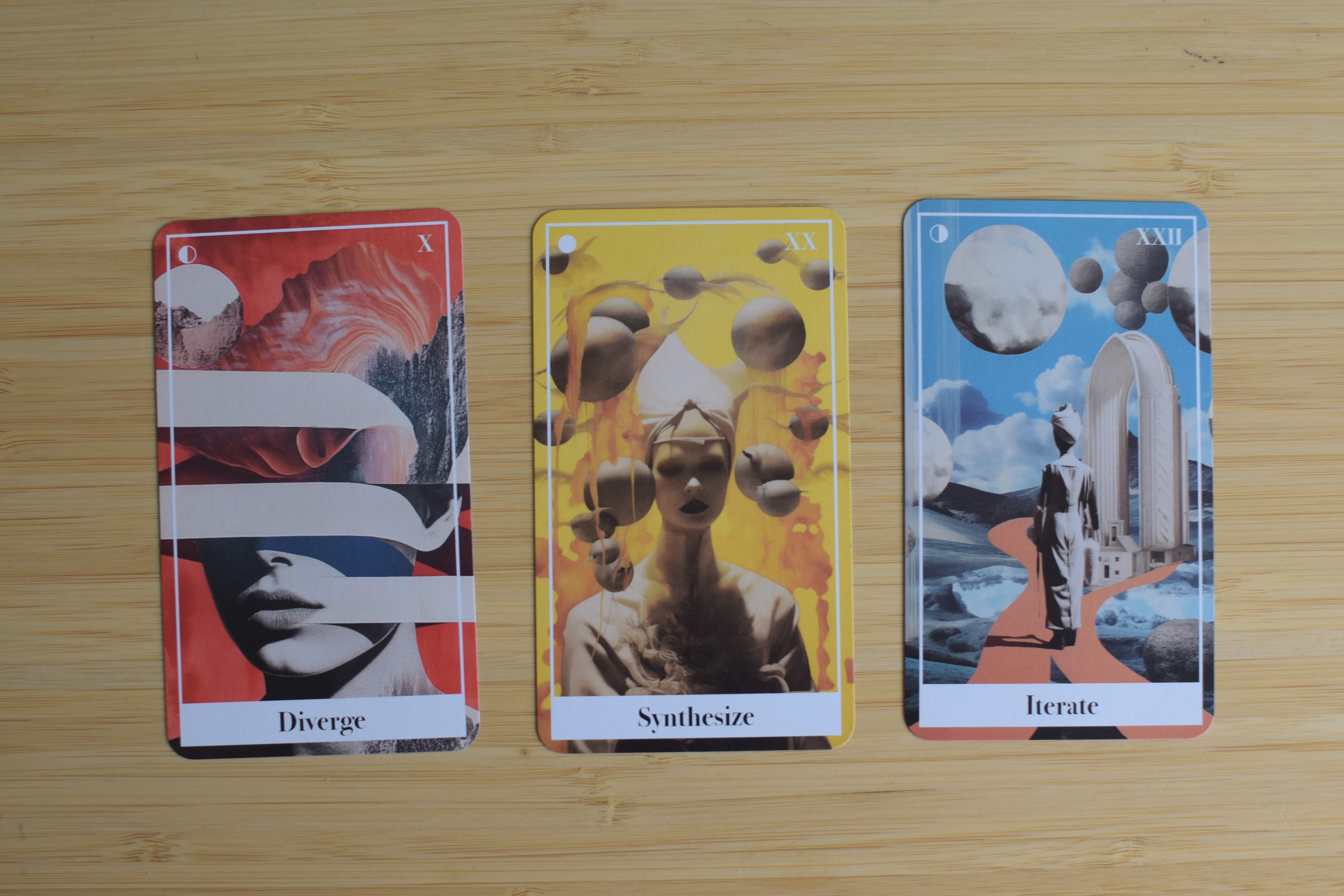
I'd tried once already, by hand: cutting collages from magazine pages for each of the 29 cards the lunar calendar needed. Each collage took hours. I'd finished three before the scale of the thing wore me down and I quietly shelved it.
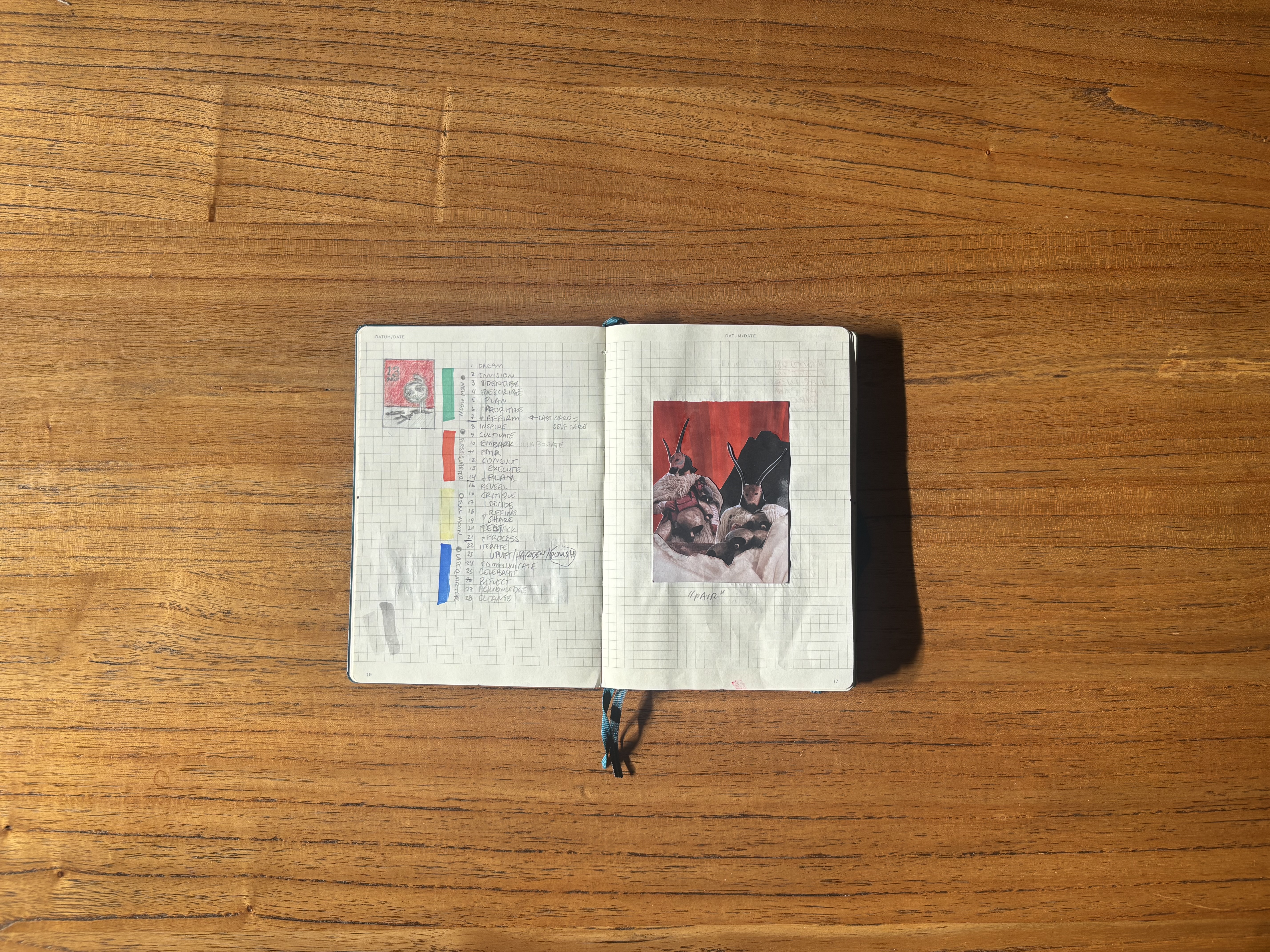
So I taught myself prompt engineering instead, in Midjourney, feeding it my own hand-made collages as reference until I found an approach that produced results I actually liked. This was early, before Claude's Sonnet models even existed, and image models still produced plenty of odd artifacts that needed cleaning up by hand. Within a week I had all 29 images: work that would have taken the better part of a year by hand. I was already living the shift I'd only read about: designers moving from making the work to curating and directing it.
Writing the rituals and interpretations hit the same wall. I'd hand-written a few. I still remember the Pair card specifically. But even as a professional writer, the scale of 29 cards slowed me down. I tried ChatGPT first and found it sterile, unfeeling, prone to breaking the structure I'd set even before I knew how to prompt strictly. Then Claude arrived, and gave me the momentum to finish the rest of the deck.
Free for anyone
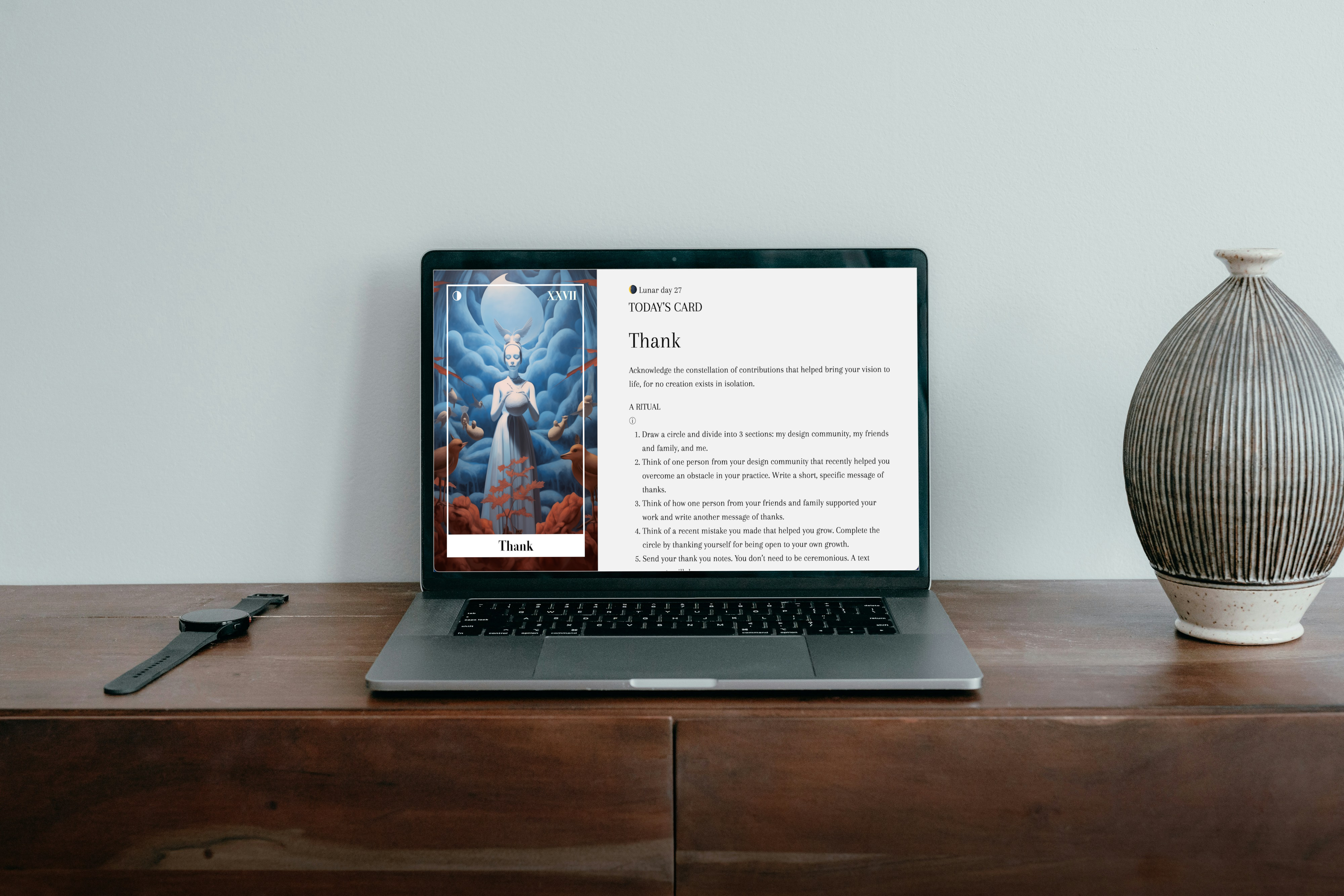
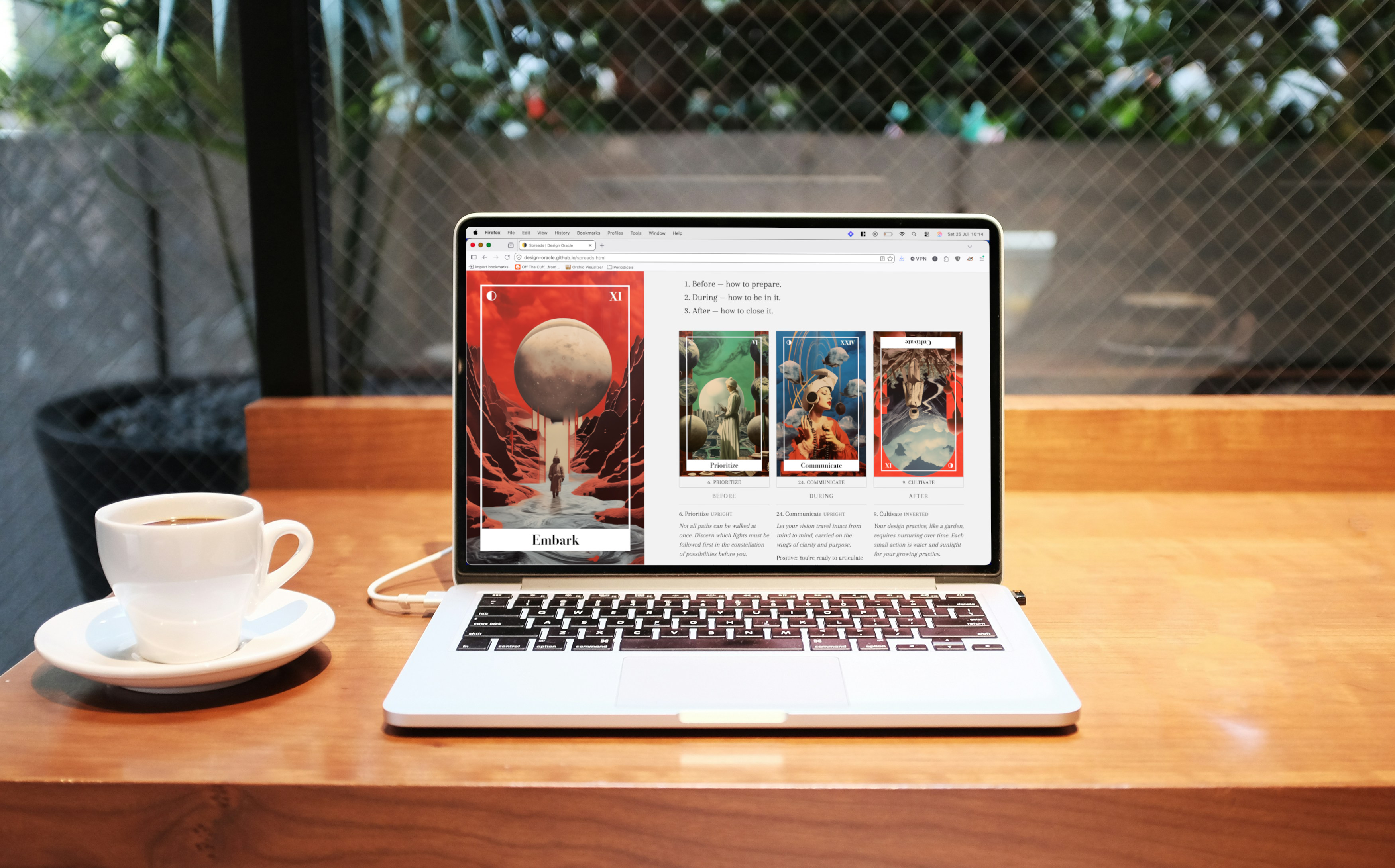
The Design Oracle is free, and lives at design-oracle.github.io. Anyone can download the deck and print their own, or just use the site as-is. The homepage shows the card, ritual, and interpretation for wherever we are in the current lunar cycle. It was recently updated with interactive readings and spreads.
I also printed 50 physical decks and sent them as personal thank-yous to people who've helped my career over the years. It's been one of the most fulfilling things I've made, both how I taught myself to work with generative AI, and an outlet for a philosophy about design that I still believe.