// Personal project
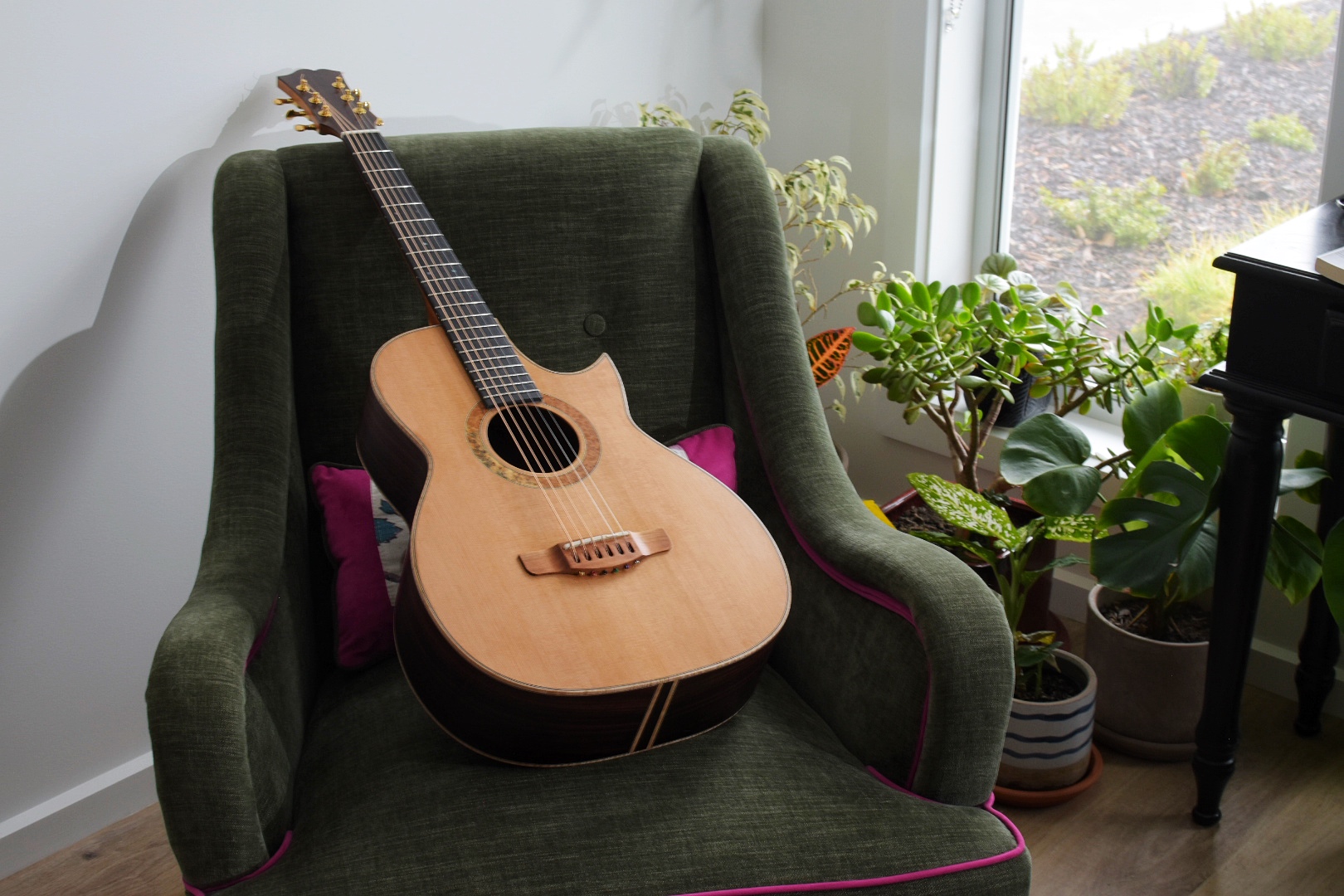
12-fret 00 acoustic guitar
A western red cedar and Indian rosewood steel string I built hanging out with Gerard Gilet.
Back in the workshop
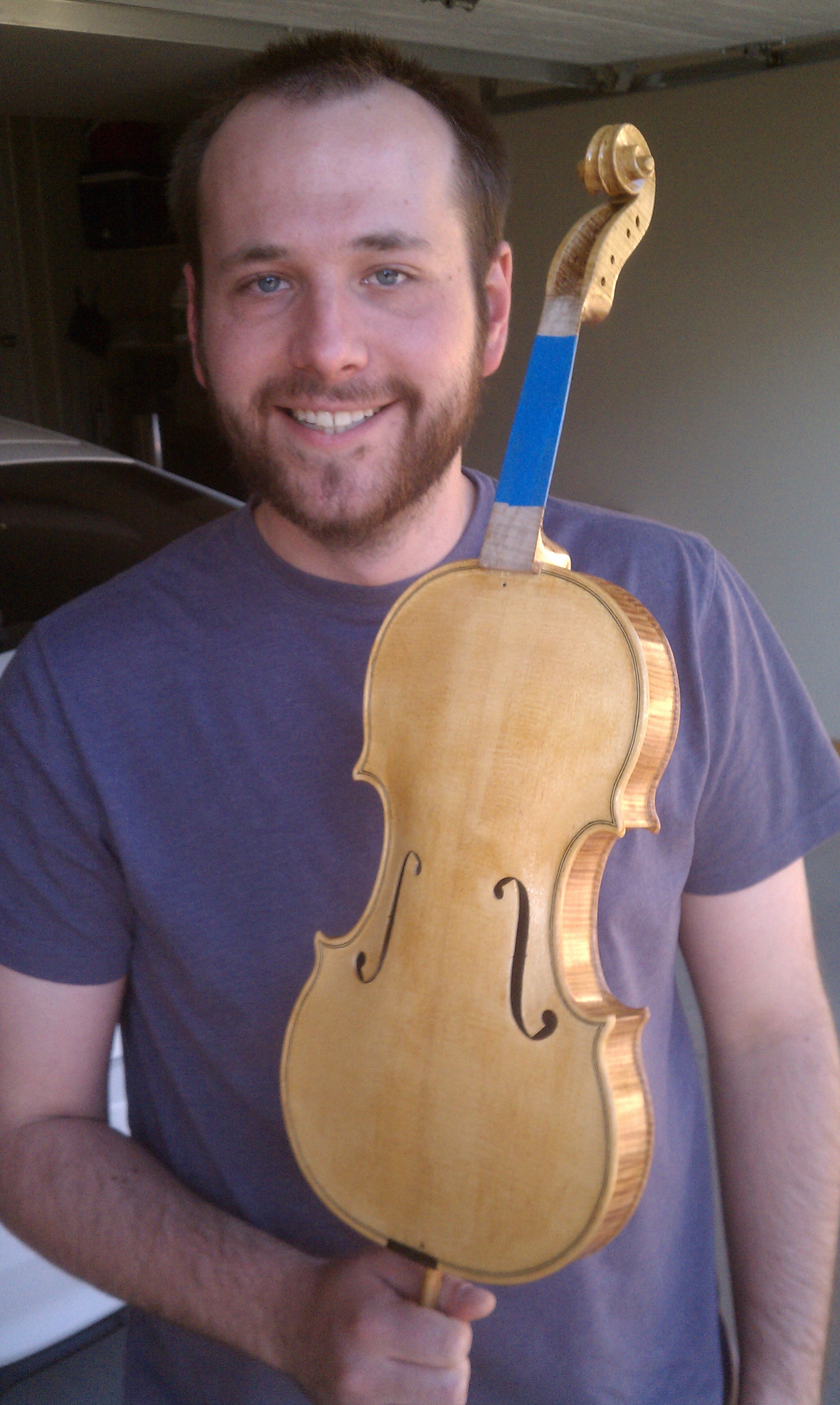
I've been a musician my whole life: piano at four, guitar at ten, jazz in high school, drums for a mildly popular bar band in Albuquerque during university. Toward the end of my degree, I spent three years building violins with Peter White at the New Mexico Musical Heritage Workshop, Guarneri del Gesù and Stradivari replicas, shown at competitions across the Southwest. The violin has an odd, loaded place in New Mexican history, carried in as a colonizing influence by the Catholic Church, right up until the Pueblo Revolt. I put instrument-making aside for years to build a career instead.
COVID brought it back. Stir-crazy at home, I joined an intensive three-week guitar-building workshop in Hornsby, NSW, under Steve Toscano. It got me back into a woodshop, which felt good, but Steve treats instrument-making as a trade, not a craft. He wasn't interested in teaching theory, and didn't seem to care much about the quality of what his students actually produced. The guitar I finished was serviceable. It needed a lot of fixing before it was actually playable.
Finding Gerard Gilet
Steve recommended a textbook during that workshop: Contemporary Acoustic Guitar, by Trevor Gore and Gerard Gilet. I looked up the authors and realized Gerard was based in Gulgong, NSW, close to Kandos, where my partner and I had just bought land, chasing an off-grid homestead dream that the cost-of-living crisis would later kill.
I arranged to tour his shop. Gerard is a craftsman and a master, with a singular drive to make better and better guitars. He calls them "high performance" instruments, and tests them with the same scientific rigor most luthiers reserve for tradition alone, tap-tuning soundboards to optimize them for the twelve-tone scale. We vibed immediately. I started visiting regularly, we became fast friends, and I traded work on his property for tuition. I eventually helped him build a digital testing rig for tap-tuning his soundboards.
Building the guitar
Western red cedar and Indian rosewood are traditional woods for nylon or gut-string guitars, almost never for steel strings, because cedar is too light and thin to survive the tension. Thickened enough to hold, it usually goes quiet and muddy instead.
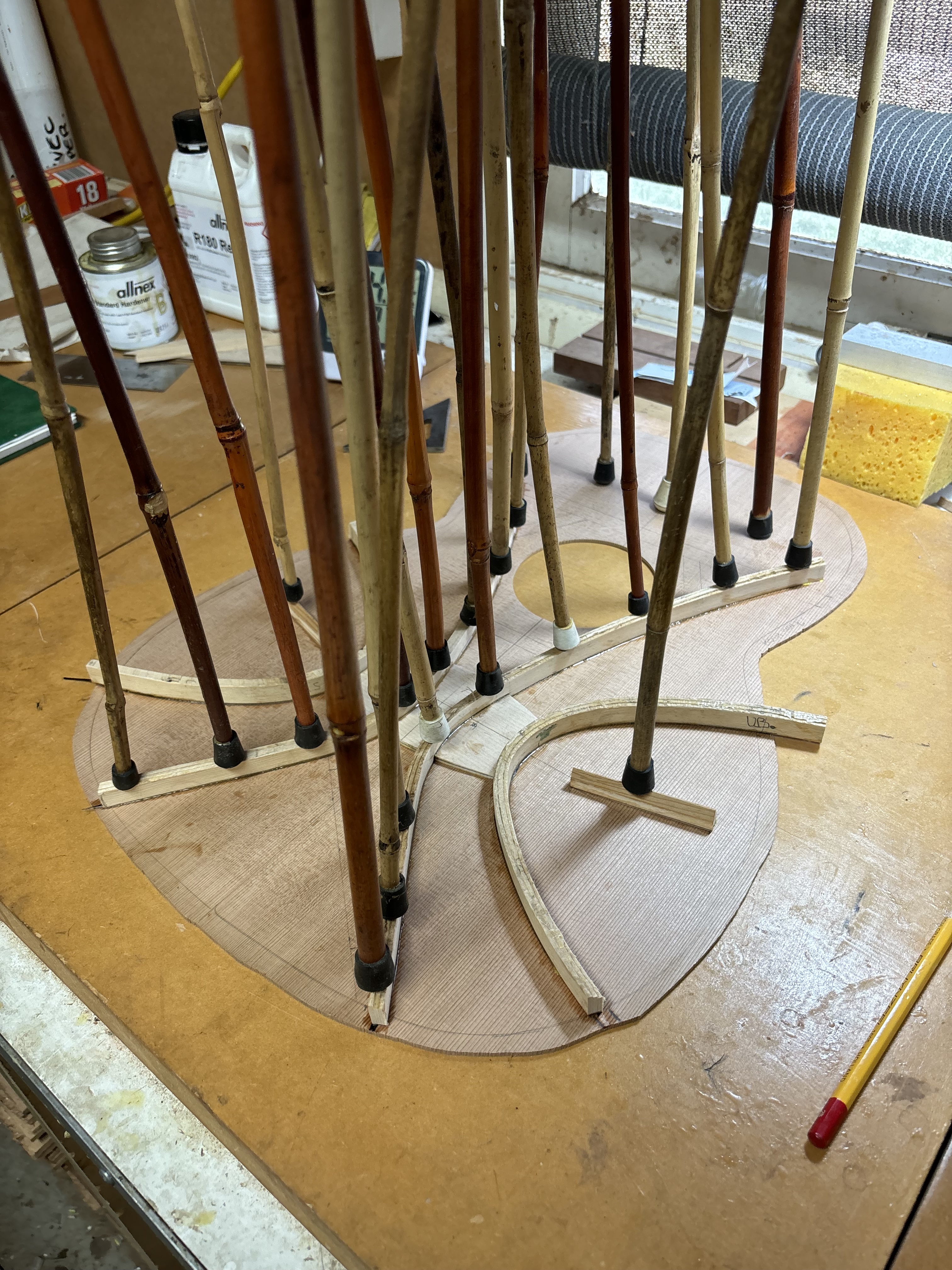
Gore and Gilet are known for solving that exact problem: falcate bracing, a system of carbon-fibre-reinforced elliptical braces under the soundboard that stiffens it while cutting weight, making a steel-string build possible from wood this light. It's part of what makes this guitar a genuine rarity.
The body style, a 12-fret 00, was Gerard's suggestion. I'd wanted a 14-fret neck join for the upper-fret access, but Gerard's own cutaway design gets there differently: instead of bending the body inward, it extends the neck block outward into the cutaway, exposing what's normally hidden inside the instrument. It gives more access to the top frets than a typical bent cutaway, even on a 12-fret join, while keeping the guitar's weight balanced around that joint instead of stacked up the neck.
The 12-fret join matters for tone, too. It sits the bridge closer to the center of the soundboard's main resonating chamber, like a speaker driven from the center of its cone instead of the edge. And the smaller 00 body trades a dreadnought's overtone-heavy boom for a tighter, more precise voice with stronger fundamentals, a better match for my fingerstyle jazz playing than an instrument built for strumming.
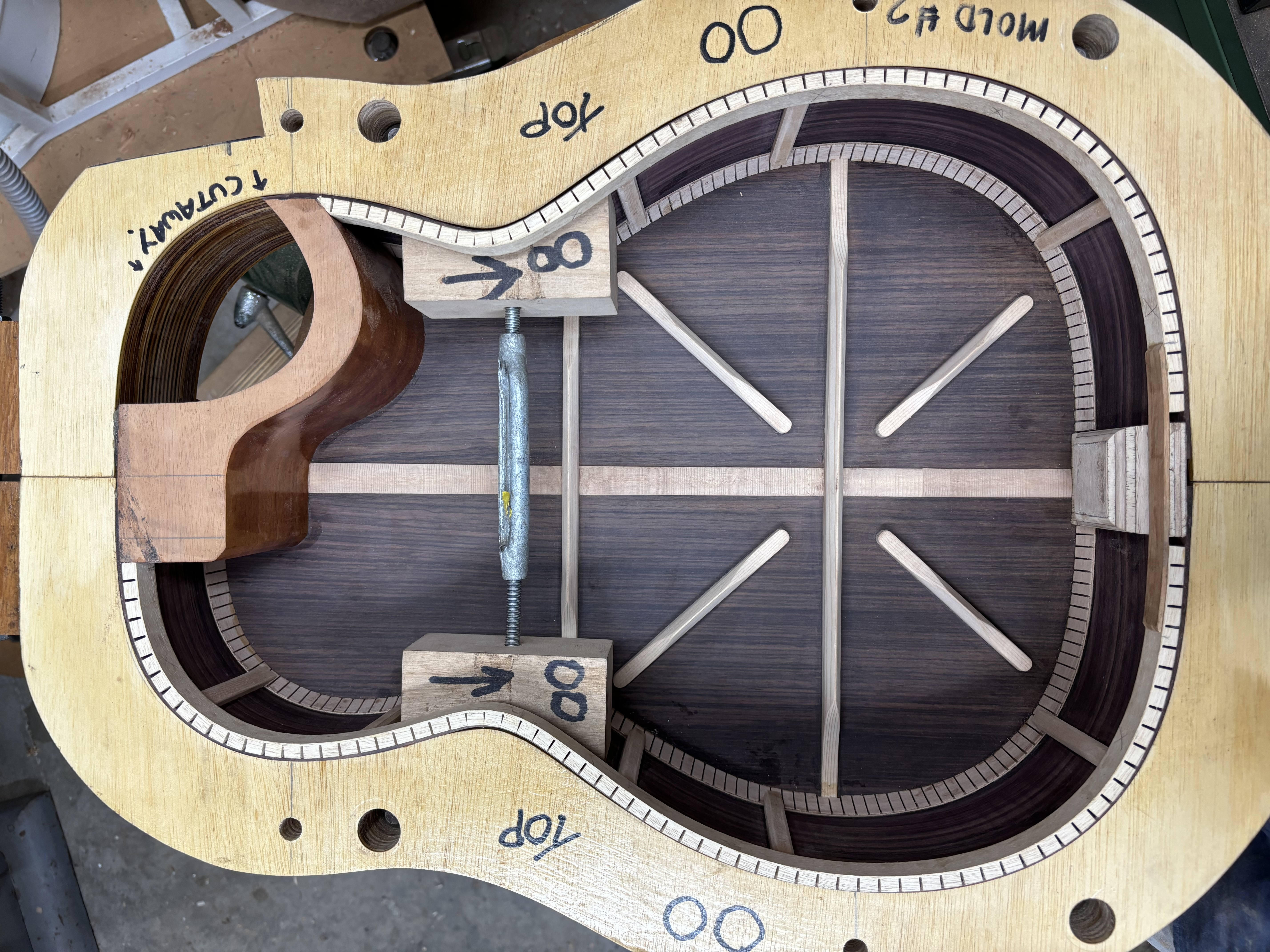 Cutaway detail
I play it every day. It's the culmination of many years of instrument building and study. It's my masterpiece, until I build the next one.