// Featured work
Designing the future of AI-driven help
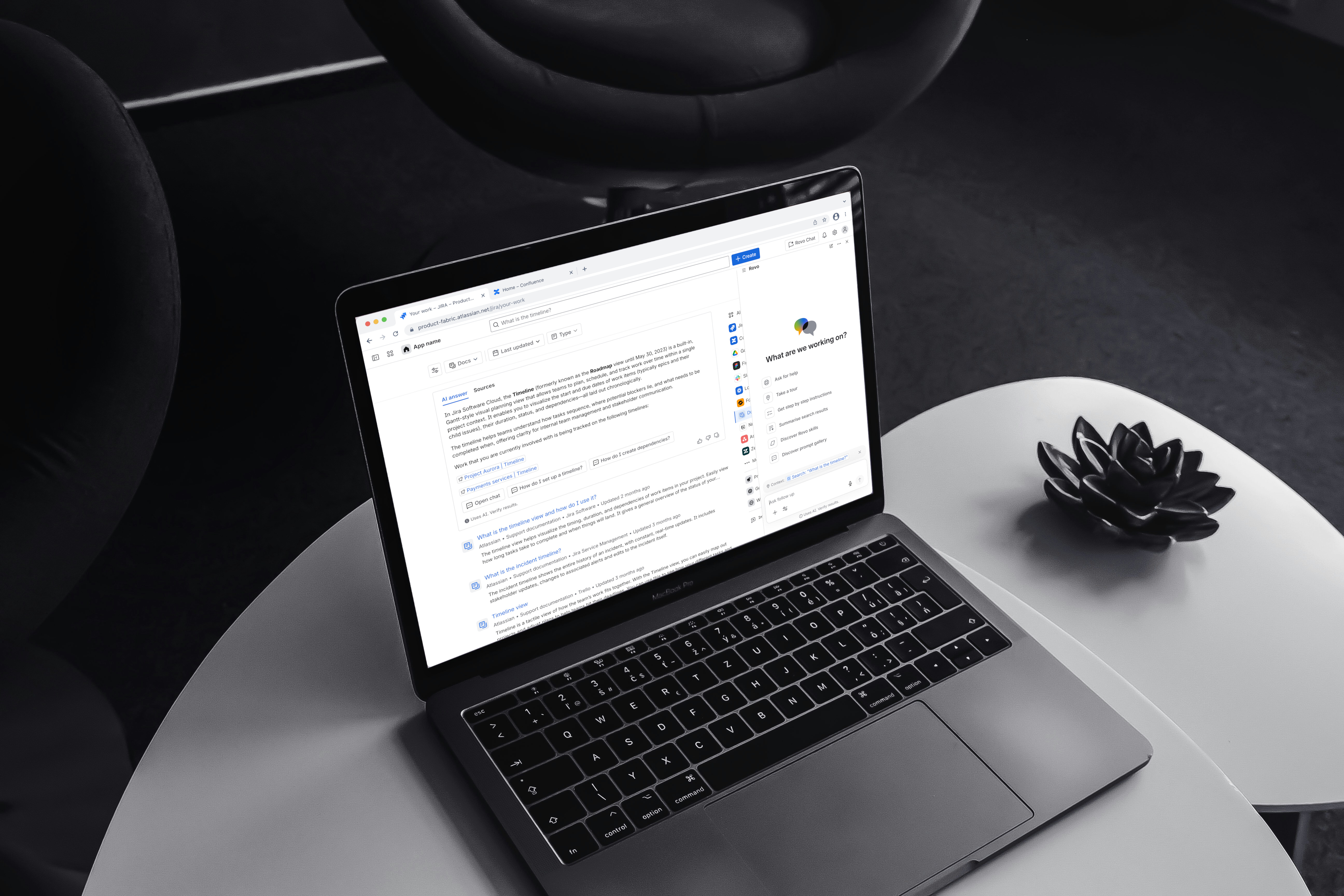
Exploring how AI can transform help and support across Atlassian's products. I led a design sprint to envision a unified, conversational assistance model—one that moves from answering questions to taking action.
The situation
Legacy help-seeking features, new AI chat functionality, a revamped navigation experience, and product growth experiments were designed and shipped in silos. We observed user behavior shifting towards natural language searches and chat for finding product usage information.
Users were frustrated with a fragmented help and support experience that frequently returned unhelpful results.
The business wanted to reduce their support contact index, increase their return leveraging structured content, and make good on AI-first messaging.
The goal. Deliver a vision for what AI-driven help and support looks like when it's consistent, intelligent, and contextual across Atlassian's suite of 24+ apps.
The team:
- 2x content designers (one UI/UX and one documentation specialist)
- 2x product designers (one lead and one mid-level)
- Product manager
- Program manager
My role. My role was to lead the investigation, facilitate collaborative sessions, direct execution designers, and contribute to concept development. I was directly responsible for the outcome.
The approach
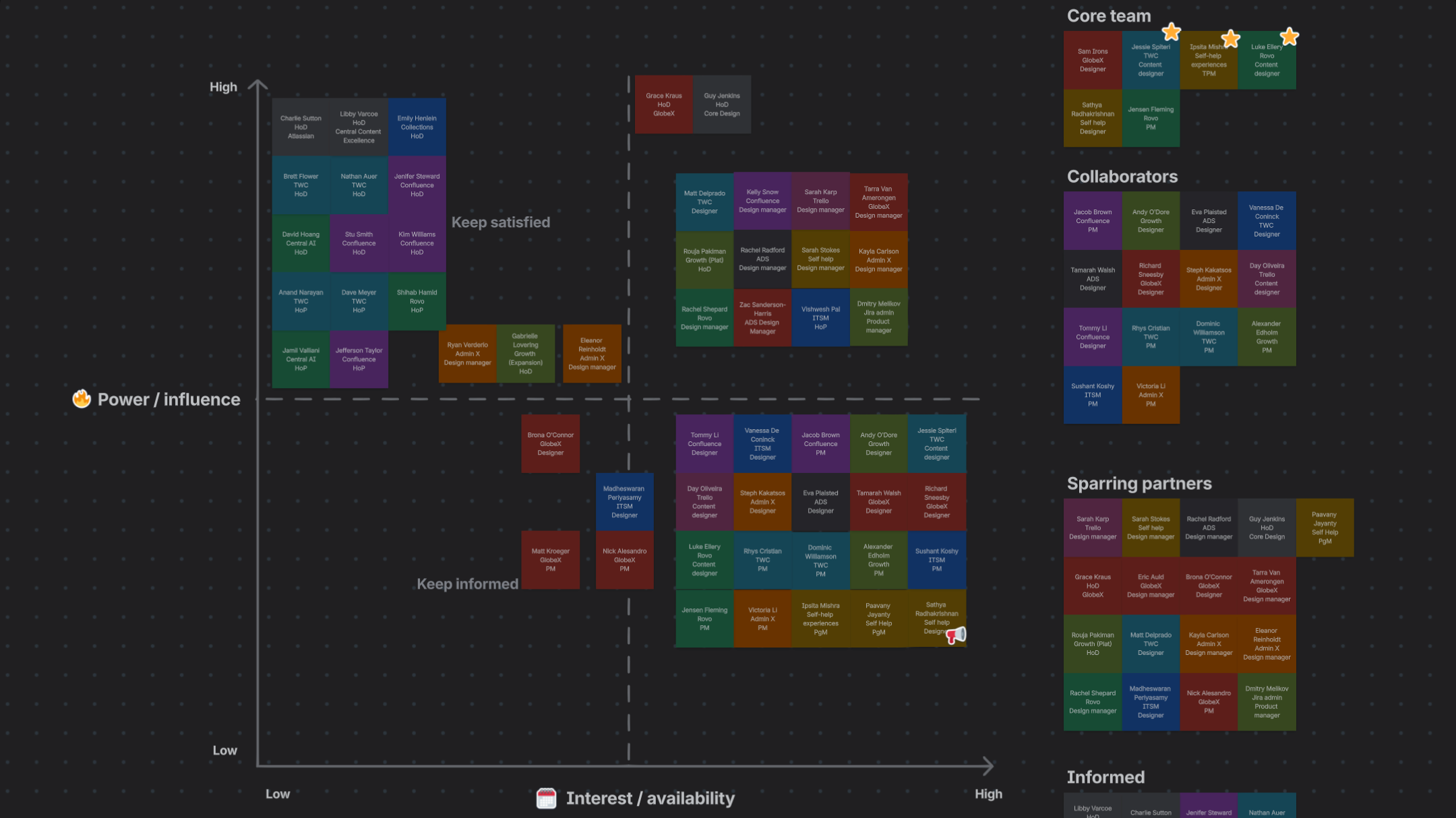
I identified and wrangled stakeholders to provide requirements, resources, collaboration, and feedback for exploring a unified vision for help.
The toolkit:
- Design gameplan
- Stakeholder mapping
- Secondary research
- Project kickoff
- Problem diagnosis and framing
- Journey mapping
- Jobs to be done analysis
- Conversational prototyping
- Rapid ideation and sketching
- Concept development
- Recommendation and report writing
A dual track contribution model (async and in-person) allowed for equal participation from collaborators and stakeholders distributed across India, Australia, and the USA. End of week Loom videos and written status let stakeholders dip in at their leisure.
AI summaries and synthesis accelerated a core team faced with an immense volume of content from stakeholders. Atlassian has a goal to be AI-native, so I pushed participants to incorporate AI assistance where possible to accelerate the work.
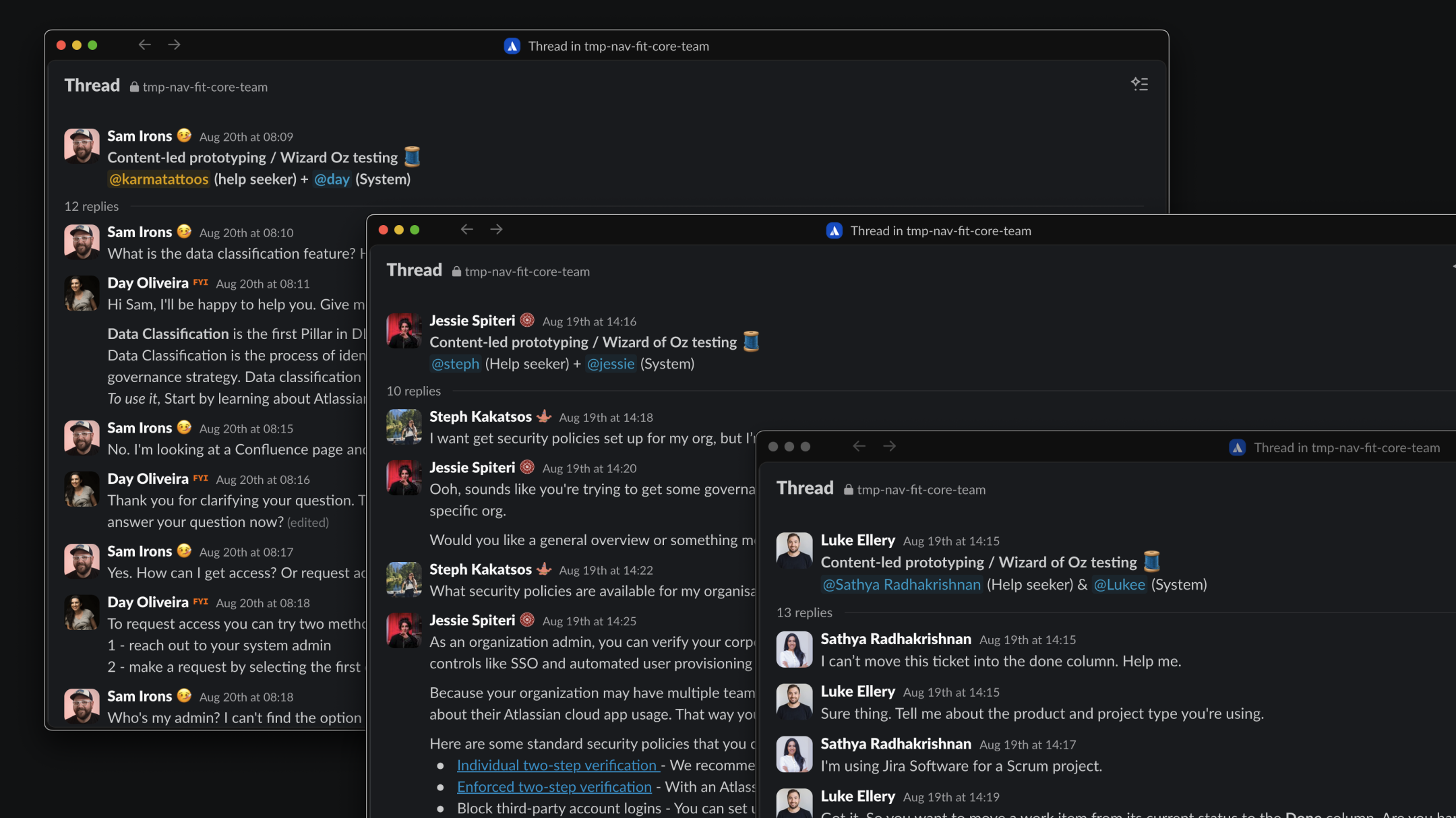
A new take on conversational prototyping drew out interaction requirements by using Slack as a false chat interface. Inspired by Wizard of Oz testing, participants took turns role-playing as a help-seeker and the help system.
The outcome
“Good help is a conversation.”
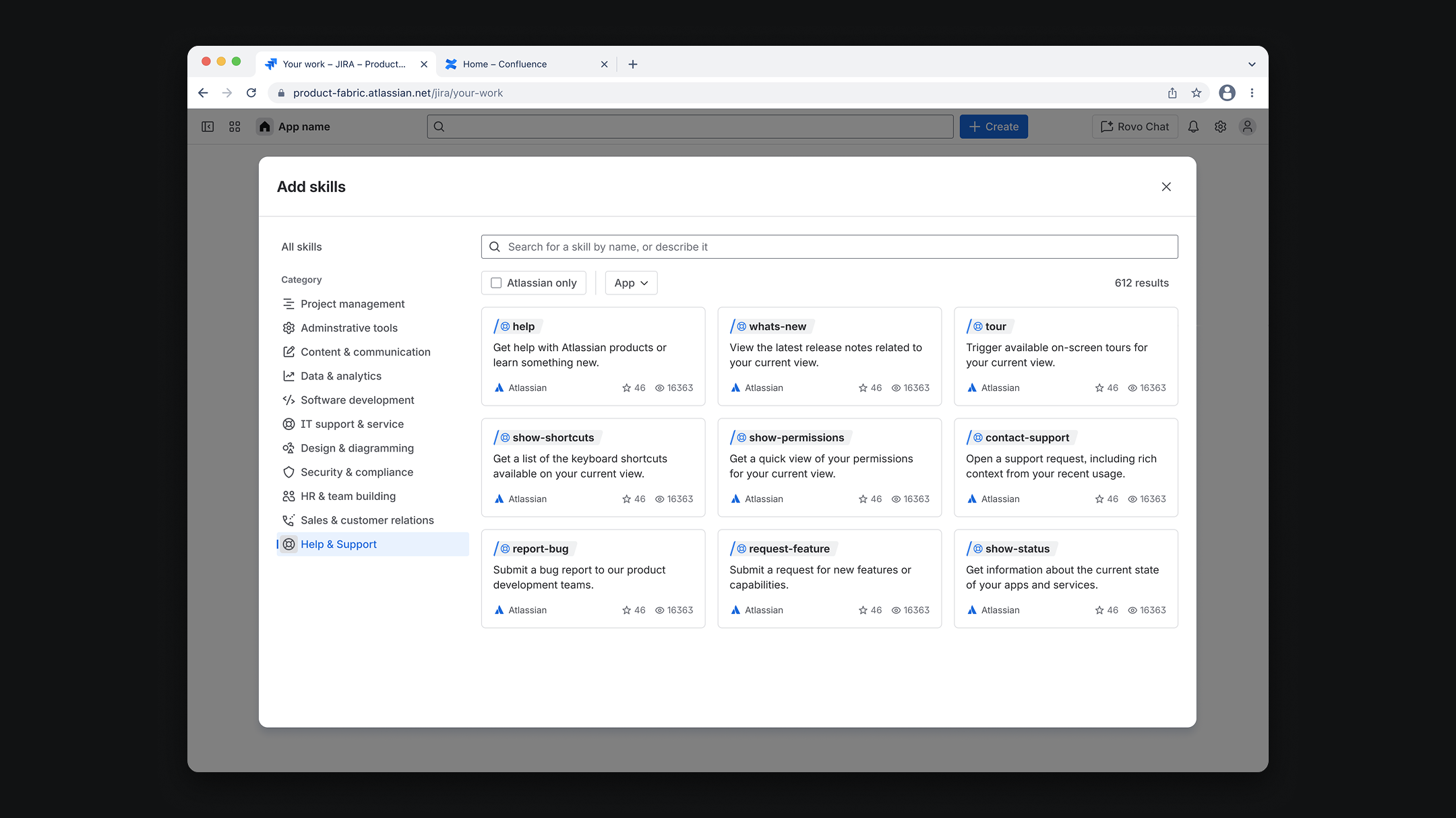
We envisioned an AI-first help journey, centered on Atlassian's Rovo chat, following the mantra above.
The final design recommendations directly address top-level company objectives regarding customer adoption of AI features and internal AI transformations for design and content systems and workflows.
This vision:
- Influenced executive leaders to fund and allocate teams to build toward the vision.
- Informed legal and technical requirements for user agreements.
- Informed CMS changes to optimize for Rovo generation.
- Directs the work of teams across support.atlassian.com and 24+ apps.
The learnings
To execute on a solid vision for the next horizon of AI, I needed to pull stakeholders away from traditional UI/UX and Atlassian systems. I needed them to focus on the new possibilities afforded by the introduction of LLMs.
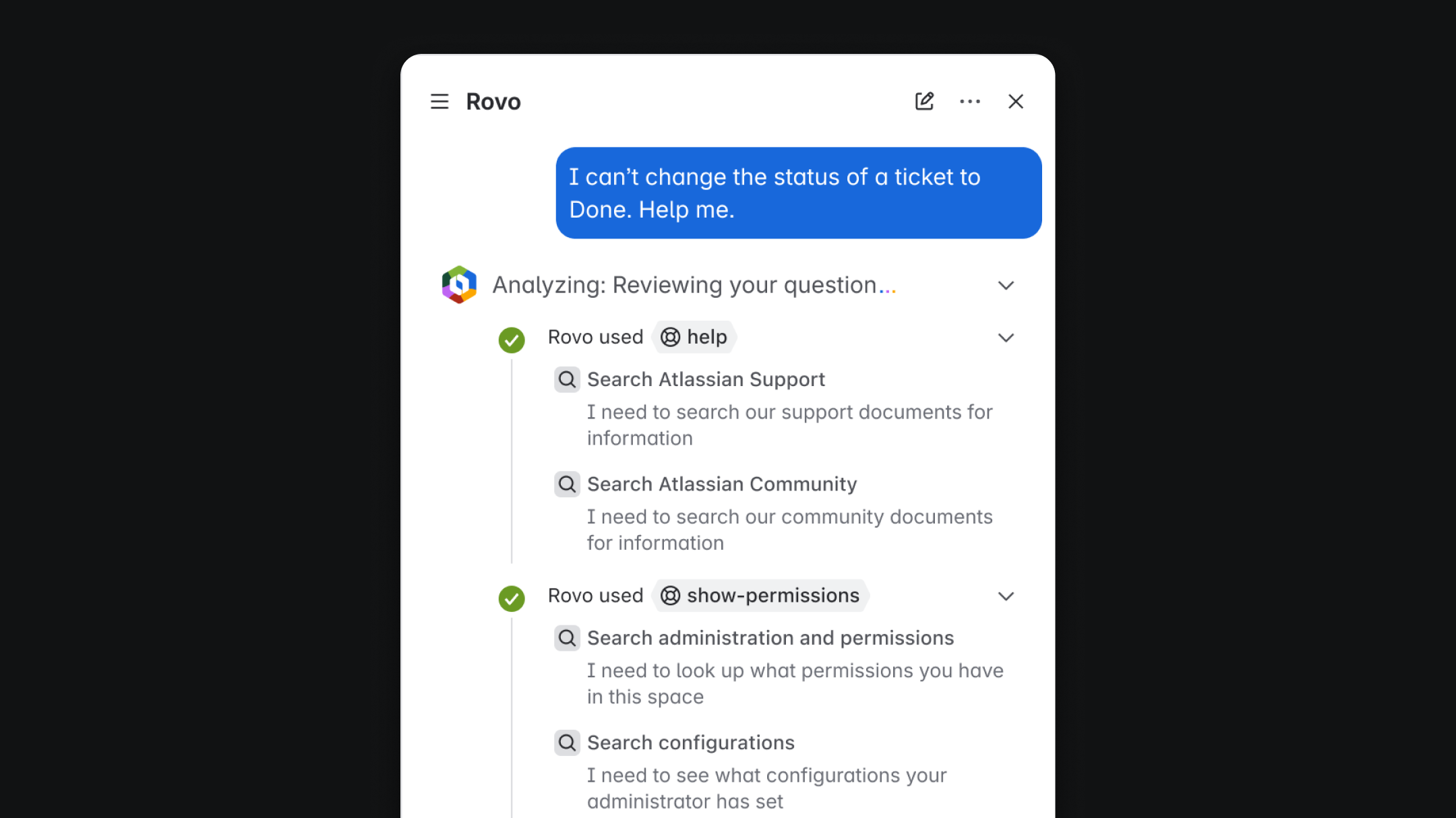
Conversational prototyping worked. It moved discussions away from the constraints of familiar patterns and into abstract novel concepts that we could investigate. For example, providing additional model context by uploading screenshots or reading system configuration settings.
AI summarization, synthesis, and interaction made it easier than ever to collect requirements, prior art, and current thinking from multiple product silos across the business.
AI assistive tools forced designers to discuss emerging technology, prompt engineering, data graphs, and other related constraints. This raised the org's collective knowledge and expertise.
Dual track collaboration models are worth the overhead. Facilitating collaboration across multiple geos benefits from async-first approaches. Async artifacts provide traceability for the organization and knowledge for generative AIs to leverage.